English
 Русский
 Español
 简体中文
简体中文 لالعربية
Product
Hook Through type Shot Blasting Machine
- Product details
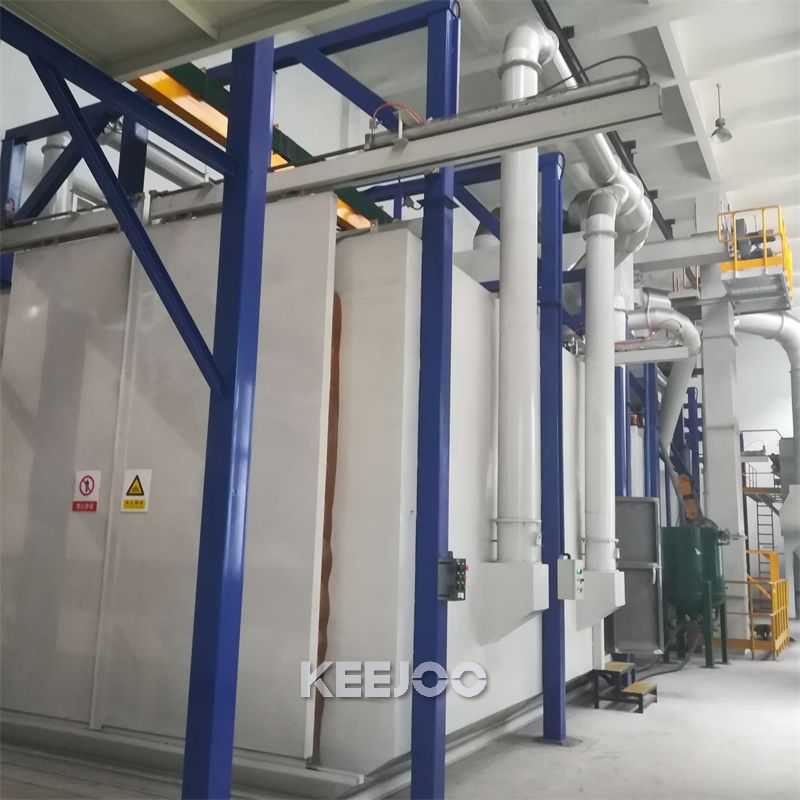
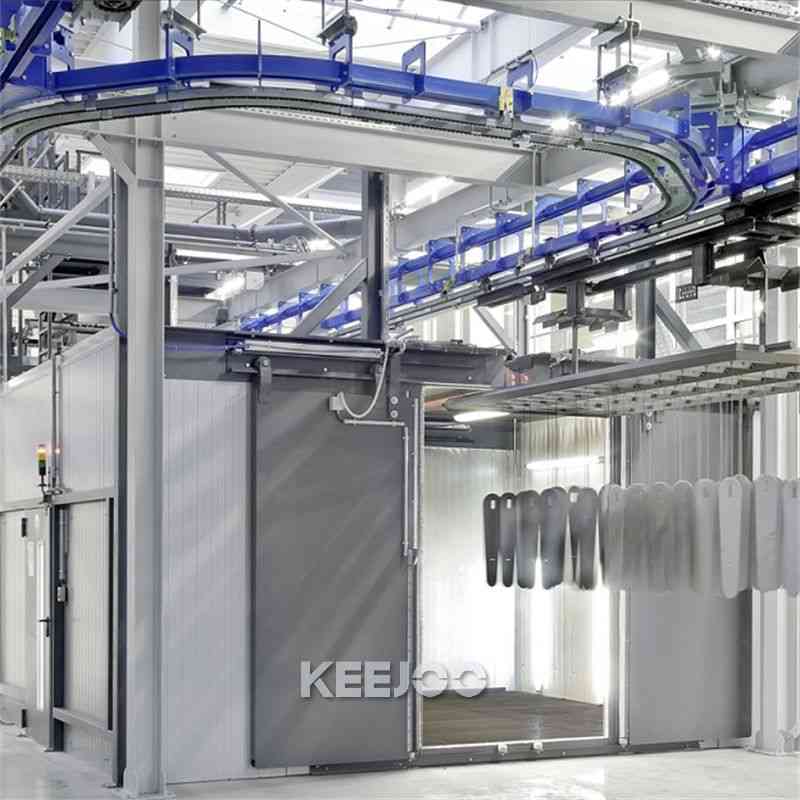
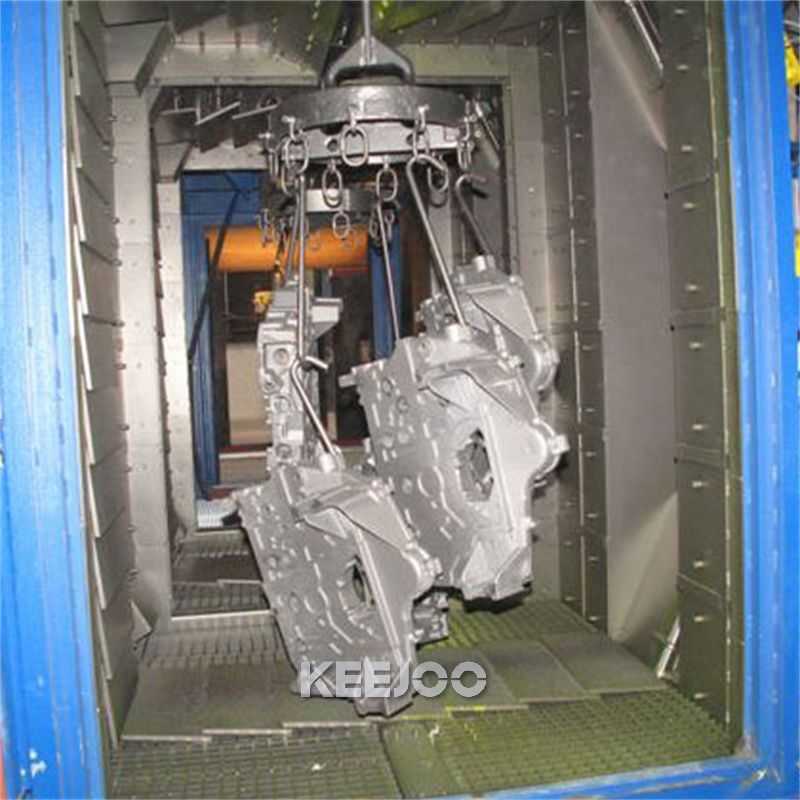
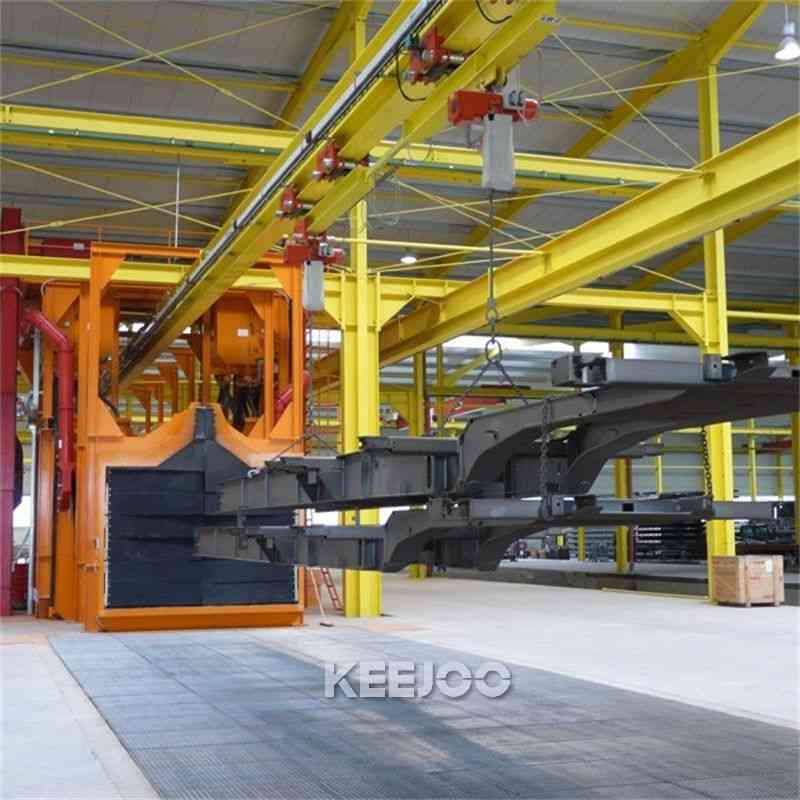
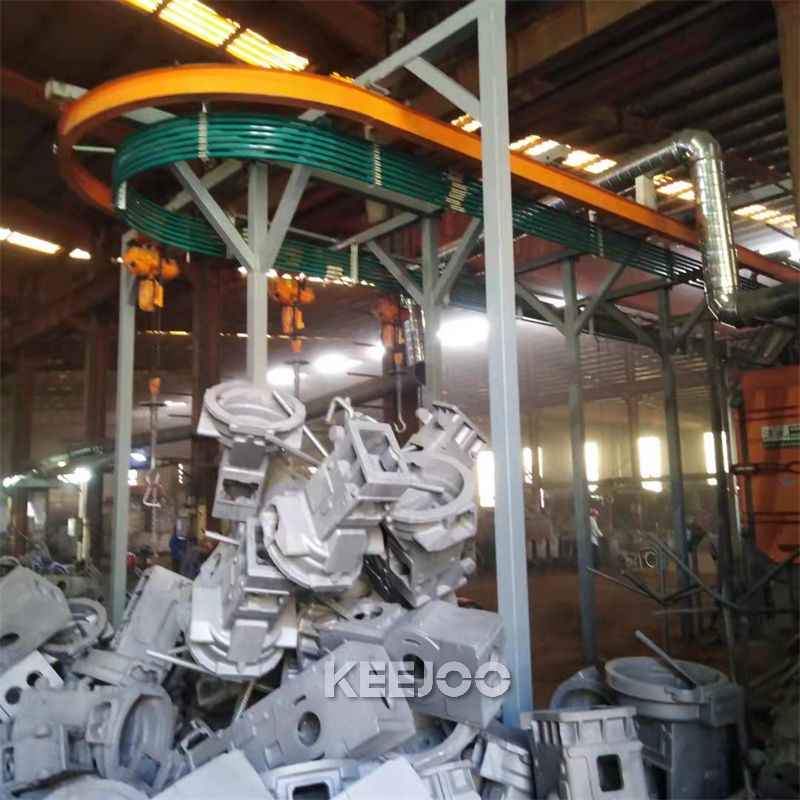
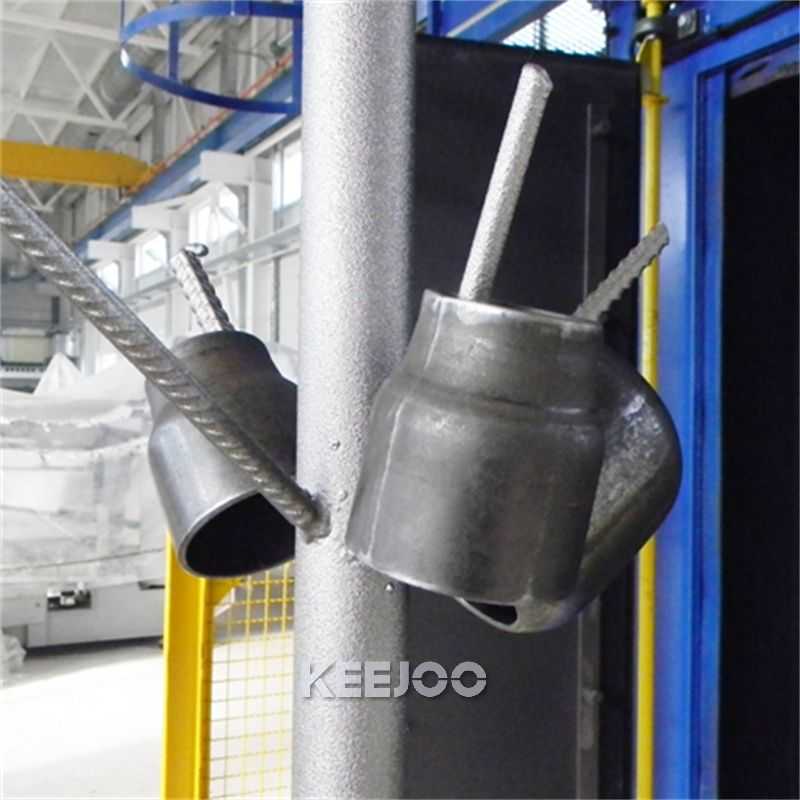
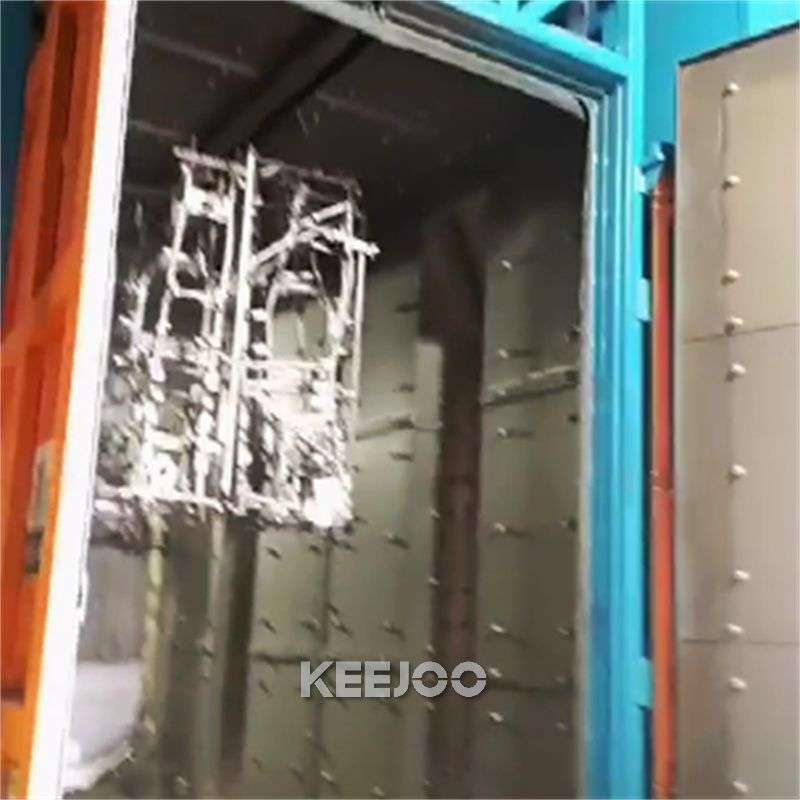
The KEEJOO Brand hook through type shot blasting machine adopts a continuous conveying mode. Workpieces are suspended on a hook system (such as dual electric hoists) and run continuously through the loading/unloading area and
the blasting chamber, achieving uninterrupted shot blasting operations. This makes it particularly suitable for the rapid processing of large batches of suspendable workpieces. The cleaning process is fully controlled by a PLC, typically featuring both automatic and manual modes, as well as automatic fault detection capabilities.
Core Advantages
Core Patent: Asia-Pacific's only high-power direct-drive blast wheel, delivering superior cleaning efficiency and significantly reducing energy consumption costs.
Ultra-low Maintenance: Proprietary maintenance-free lifting system and modular separator, slashing fault rates by 90% and cutting repair expenses by 80%.
Continuous Operation: Combining the flexibility of hook-type loading with continuous feeding, featuring 360° omnidirectional blasting to effortlessly handle large and complex workpieces.
International Quality: Certified with CE/TUV, perfectly adapted for high-end industries such as steel structures, construction machinery, and nuclear power.
Core Application Areas
Heavy Machinery & Steel Structures: hook through type shot blasting machine primarily used to remove rust, welding slag, and scale from large steel structural components and construction machinery (such as excavator booms and bulldozer frames). In the building and bridge industries, it is also used to process large profiles like H-beams and steel plates, preparing them for subsequent coating.
Automotive & Vehicle Manufacturing:
Used to treat truck frames, tank truck bodies, and automotive components (such as engine blocks, wheels, leaf springs, and axles) to remove scale after forging or welding, thereby enhancing coating adhesion.
Casting & Forging Industry: Used to clean residual sand and scale from the surfaces of various castings and forgings. It is a crucial step in enhancing the appearance and subsequent machining quality of cast and forged parts.
Technical data
Item Typical Parameter Range Workpiece Size Up to Φ3000mm in diameter and 2400mm in height Max. Single Hanging Weight 1000kg - 5000kg, or even higher Number of Blast Wheels 4 - 16 units, customized according to cleaning requirements Blast Flow Rate Approx. 220 - 250 kg/min per unit Total Power Approx. 85kW - 380kW Single Cleaning Time 1.5 - 15 minutes, depending on the workpiece and process requirements We offer customized solutions tailored to your specific workpiece sizes, production volumes, and cleaning requirements.
FAQ
Q1: What types of workpieces can the hook through type shot blasting machine handle?
A: This equipment is specifically designed for large, heavy, and irregularly shaped workpieces. It is widely used for surface rust removal, scale removal, cleaning, and fatigue resistance strengthening of steel structures (such as H-beams and large welded parts), construction machinery, castings and forgings, large valves, and pressure vessels.
Q2: How is the cleaning effect? Can it achieve dead-spot-free cleaning?
A: The cleaning effect is highly significant, typically bringing the workpiece surface to a high-standard rust removal grade of Sa2.5–Sa3. The equipment uses a suspended hook combined with a 360° rotation device and multi-angle, high-efficiency blast wheels inside the chamber, ensuring comprehensive, dead-spot-free blasting coverage.
Q3: Is the power consumption high? How can energy consumption be controlled?
A: Power consumption depends on the total installed power of the equipment, the rust severity of the workpieces, and the processing time. To reduce energy consumption, it is recommended to: Arrange production schedules rationally to
minimize no-load running time; Adjust the blast flow rate according to the rust condition of the workpieces; Maintain the equipment regularly (e.g., lubricating bearings and clearing blocked abrasive media) to reduce extra energy consumption caused by mechanical friction.
Q4: What should be done if uneven blasting occurs during operation?
A: Uneven blasting is usually caused by the following factors and can be troubleshooted accordingly: Improper workpiece placement: Ensure workpieces are hung centrally and vertically with reasonable spacing to avoid mutual shielding and shadow zones. Blast wheel adjustment deviation: Check the rotation speed and angle of the blast wheels. If necessary, adjust the window position of the control cage to ensure the blast stream fully covers the workpiece.
Abrasive media issues: Check if the media is severely worn or insufficient in quantity. Promptly supplement or replace it with qualified media.
Internal liner wear: Regularly inspect the protective liners inside the cleaning chamber. Severe wear can affect the rebound and distribution of the media and requires timely replacement.
Q5: What safety and maintenance precautions should be noted during daily use?
A: Safety Protection: Operators must wear protective glasses, earplugs, dust masks, and wear-resistant work clothes. It is strictly prohibited to stand in hazardous areas or leave the post without authorization while the equipment is running.
Pre-operation Inspection: Check the wear of vulnerable parts such as blast wheel blades and control cages. Ensure seals are intact and doors are tightly closed. Clean up debris inside the chamber to prevent blockages.
Regular Maintenance: Periodically check lubrication points and apply grease. Monitor the operating status of the dust collection system and clean accumulated dust in time to ensure environmental compliance and extend equipment lifespan.
Q6: What are the main wearing parts of the equipment, and what is the approximate replacement frequency?
A: The main wearing parts include the blades, control cages, impeller wheels, and blast wheels inside the blast wheel assembly, as well as the wear-resistant protective liners inside the cleaning chamber. The replacement frequency depends on the workpiece material, processing volume, and abrasive media quality. For example, using high-wear-resistant alloy materials (such as imported rolled Mn13 liners) can significantly extend the service life. It is recommended to inspect them once per shift and replace them immediately if severe wear is found to avoid affecting the cleaning effect or damaging the equipment.
related products
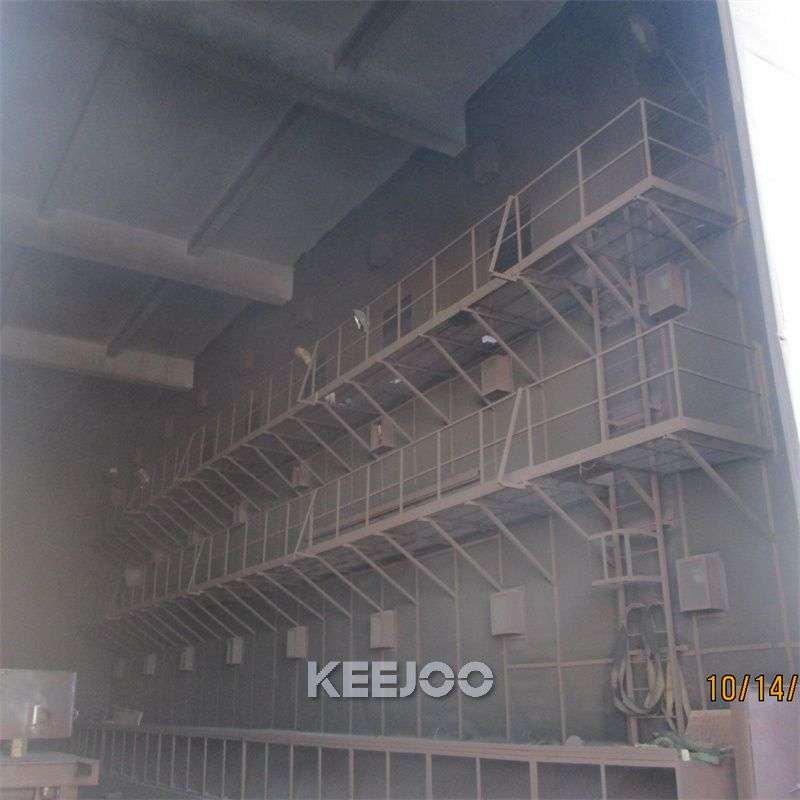
section steel sand blasting room
This equipment designed for the surface ...
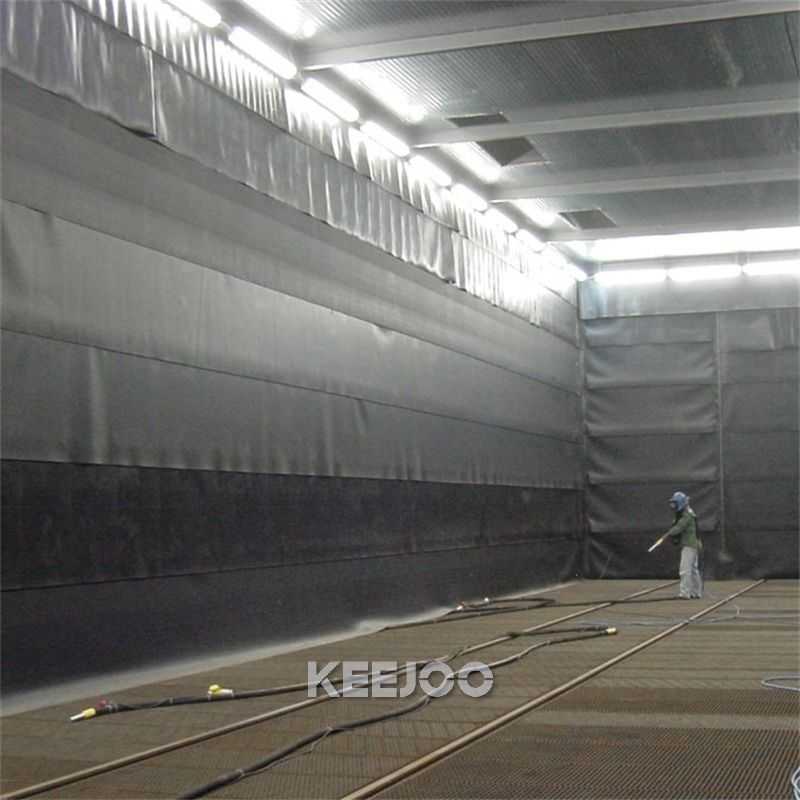
Large Forgings Sand Blasting Room
The high quality Large Forgings Sand Bla...
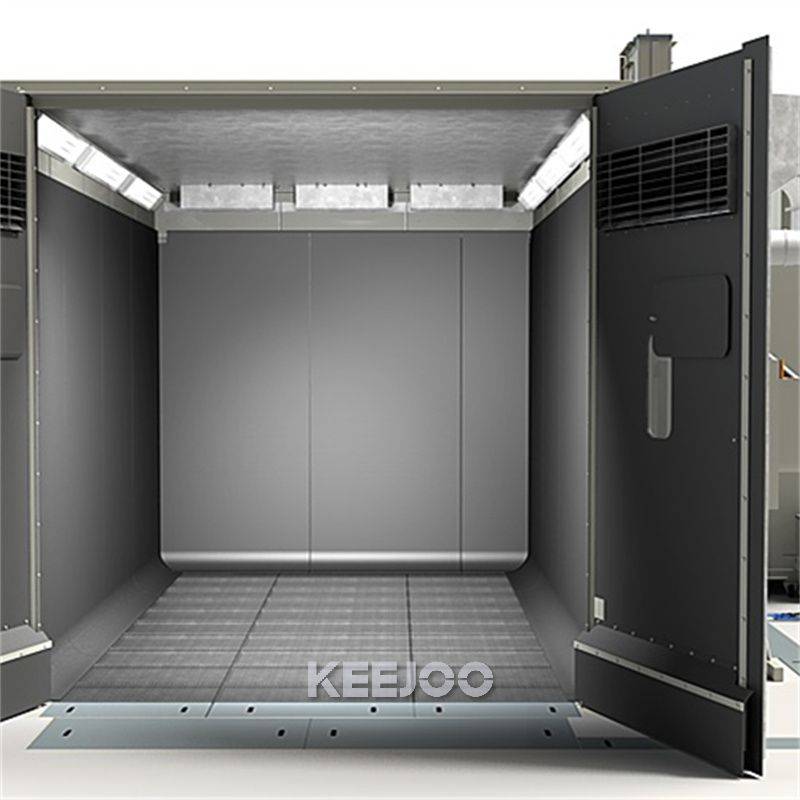
Railway Wagons Sand Blasting Room
The high qaulity railway wagons sand bla...
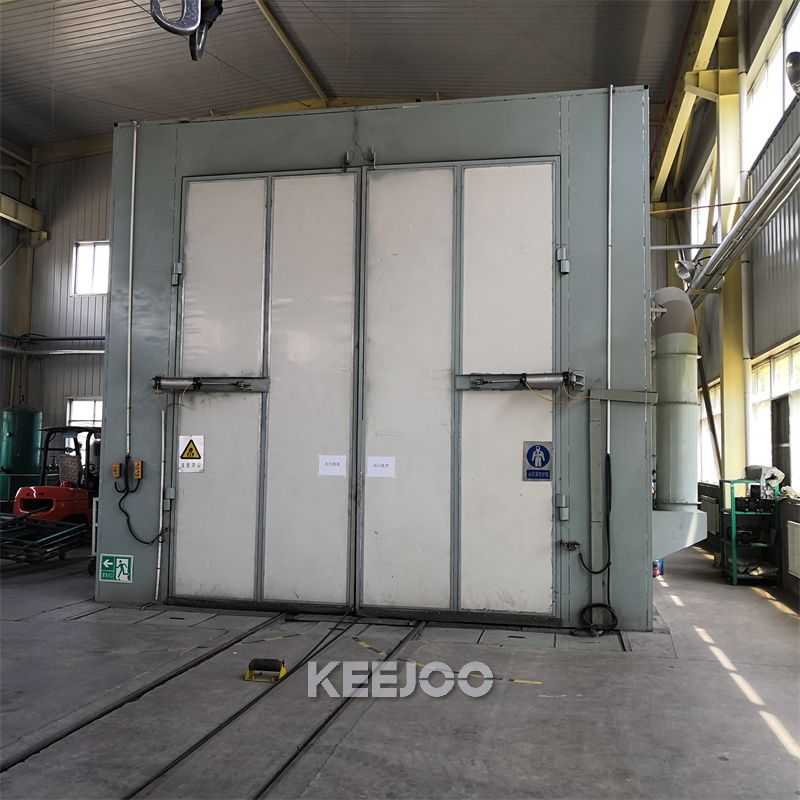
Large Storage Tanks Sand Blasting Room
The large storage tanks sand blasting ro...
Product Inquiry
Please leave your message, we will contact you quickly after receiving it, thank you for your support!
common problem
Q
What are the characteristics of cigarette box three-dimensional packaging machine?
A
1. There is no need to adjust the height of the countertops on both sides of the machine when changing the mold, and there is no need to disassemble and assemble the discharge chain or put the hopper, which shortens the four-hour mold replacement time of the traditional machine to only 30 minutes.
2. Adopting a new dual insurance mechanism, the machine does not need to be shut down when it is not running synchronously, nor will it damage other parts.
3. The original one-way hand crank device prevents the machine from shaking in reverse, and the handwheel does not rotate during operation, making the operator safer.
4. The new double rotary film cutting knife can ensure that the machine can be used continuously for many years without a sharpening port, overcoming the defect that the traditional fixed single rotary film cutting blade is easy to wear.
Q
Automatic poker transparent film three-dimensional packaging machine packaging products?
A
Automatic poker transparent film three-dimensional packaging machine is mainly suitable for bulk poker, compressed biscuits, sachima, stickers, sticky notes, wafer biscuits and other bulk or multi-object collection of three-dimensional packaging.